Can Low Albumin Cause a Low Anion Gap?
Yes. Low albumin can result in a low anion gap, and it is a frequent reason a lab result looks unusually low. If you are using an Anion Gap Calculator, the result may need an albumin correction before it is interpreted as a real indicator to an acid-base disorder. A low anion gap is often not the primary problem itself; it is usually a diagnostic clue that points to an underlying cause such as hypoalbuminemia, laboratory error, or another medical condition.
Understanding the relationship between albumin and the anion gap matters because the anion gap is part of routine blood test interpretation. It is often reported from a metabolic panel, and it helps clinicians review acid-base balance, especially when considering metabolic acidosis or other electrolyte shifts. The key is to look at the whole pattern of electrolytes, not just a single number.
What’s the Anion Gap?
The anion gap is a computed value that measures the difference between positively charged and negative particles in the blood. Simply put, it compares major electrolytes reported on a serum chemistry panel, especially sodium and chloride, and often includes bicarbonate in the calculation. The result gives a sense of how many unmeasured anions are present in circulation.
Even though the formula is straightforward, the clinical meaning is crucial. A normal anion gap suggests that measured cations and anions are balanced in the expected way. A low anion gap is less common than a high one, but it can still be meaningful. When it appears, it may reflect changes in protein charge, shifts in electrolytes, or a problem with the lab value itself.
Many clinicians think of the anion gap as a shortcut for identifying acid-base disturbances. It does not diagnose one condition by itself, but it can assist with evaluation of an acid-base disorder and reduce the differential diagnosis. That is why the context of the full metabolic panel and the patient’s clinical picture matters so much.
How an Anion Gap Calculator Operates
An Anion Gap Calculator employs values from a laboratory test, usually the serum sodium, chloride level, and serum bicarbonate levels, to determine the anion gap. Some methods also consider potassium, though many routine calculations do not factor it in. The calculator is basically a tool for fast anion gap calculation using values from plasma electrolytes or a similar electrolyte panel.
The usual output is compared with a reference range to determine if the result is low, normal, or high. That comparison helps reveal whether the lab result requires more attention. A low value may be due to hypoalbuminemia, but it can also arise from other causes, so the calculator is only the first step in interpretation.
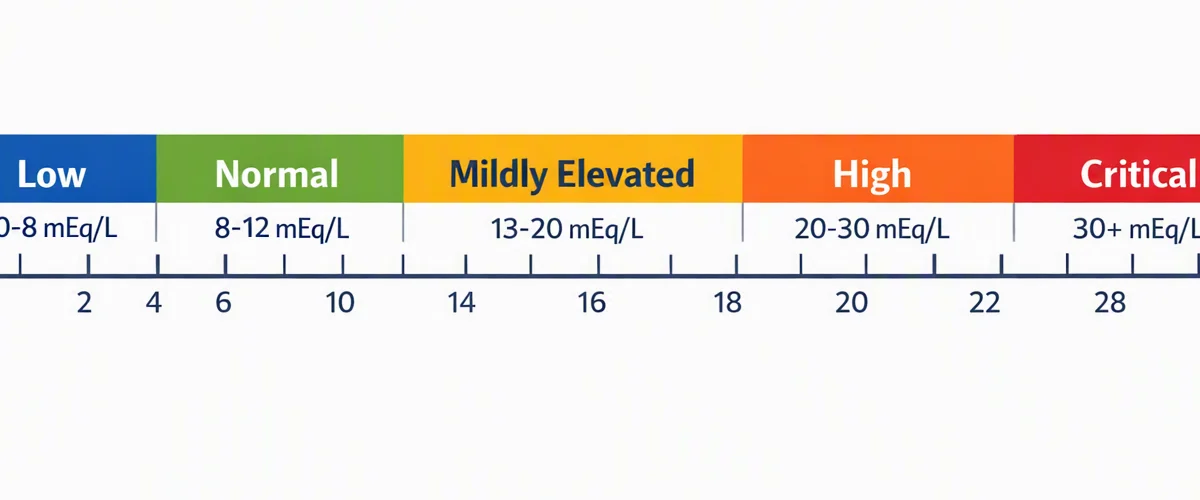
Here is how the tool is generally used in practice:
- Review the sodium, chloride, and serum bicarbonate values.
- Determine whether potassium is included in the formula.
- Evaluate the calculated number with the expected reference range.
- Assess whether albumin correction is needed.
- Review the result alongside other laboratory data and symptoms.
This approach makes the Anion Gap Calculator clinically useful because it provides a quick way to identify whether the lab result is likely to be a true low anion gap or just a reflection of another factor. It is particularly helpful when investigating an electrolyte imbalance or investigating possible metabolic acidosis.
Yes: Reduced Albumin Can Decrease the Anion Gap
Albumin is the most abundant anionic protein in the blood, and it strongly influences the anion gap. When albumin drops, as in hypoalbuminemia, the measured anion gap often decreases as well. That happens because albumin contributes a large portion of the normal negative charge in serum.
In plain language, if fewer negatively charged proteins are present, the body still maintains charge balance by adjusting the concentrations of other ions. As a result, the reported anion gap can appear lower than expected even when no major new acid-base problem is present. This is why a low anion gap is often not completely understood unless albumin is checked at the same time.
The corrected value, called the corrected anion gap, refines the calculation for low albumin. This correction helps separate a truly abnormal anion gap from one that appears low because of reduced protein charge. In many cases, the corrected result gives a more precise picture of acid-base balance and clinical relevance.
Low albumin is frequent in many settings, including inflammation, poor nutrition, liver disease, protein loss, or severe illness. Because albumin is a major serum protein, any reduction can influence blood test interpretation. So when the anion gap is unexpectedly low, checking albumin is one of the initial practical steps.
The Reason Albumin Changes the Gap
The explanation albumin alters the gap is linked to protein interaction and charge distribution. Albumin is a negative-charge serum protein, so it helps offset positively charged ions in the blood. When albumin decreases, there are less negative charges available, which alters the balance of hidden anions and can reduce the apparent gap.
This process is tied to electrical neutrality, a core principle of physiology. The body always preserves an overall balance of positive and negative charges. If one major negatively charged component drops, other ions may adjust subtly to preserve that neutrality. The anion gap calculation captures this balance, so changes in albumin can have a significant effect.
Albumin also matters in acid-base balance. It is not just a passive protein; it helps buffer the system and shapes the way blood chemistry is interpreted. When albumin is low, the anion gap may underestimate the presence of certain acids or mask a hidden acid-base disorder. That is why clinicians often look at the albumin-adjusted anion gap rather than the raw number alone.
Another useful way to think about it is this: the anion gap is a summary of serum chemistry, not a complete map. Albumin is a key part of that picture because of its protein charge. If the serum protein pattern varies, the calculated value changes too.
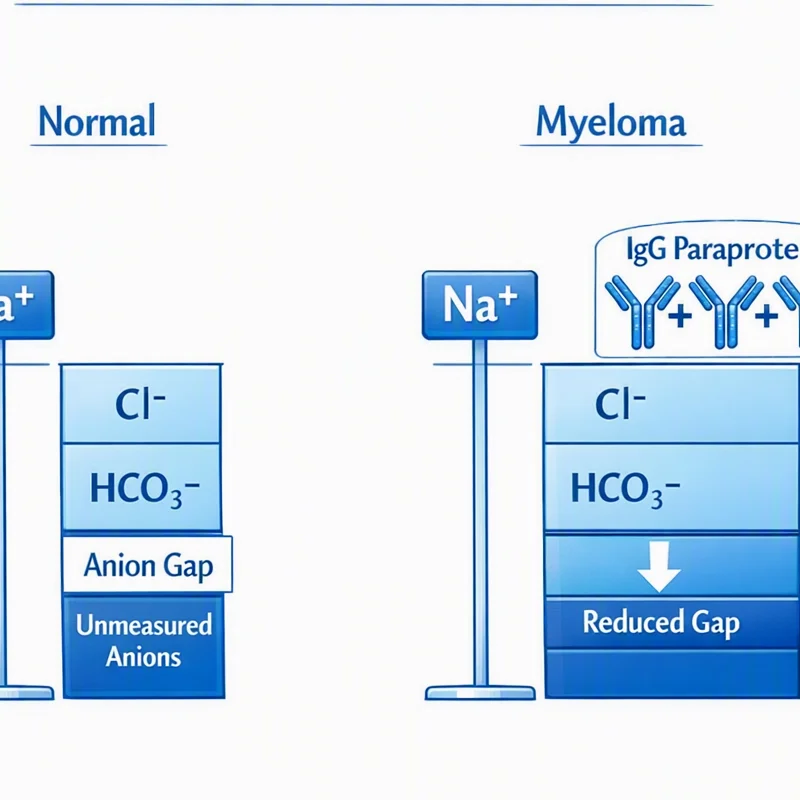
Additional Causes of a Low Anion Gap
While low albumin is a typical explanation, it is not the sole cause. A low anion gap should also suggest the possibility of laboratory error, especially if the result does not align with the rest of the lab data or the patient’s condition. Repeating the test can help determine whether the finding is real.
Lithium exposure is another important cause. Lithium can behave as an unmeasured cation and decrease the anion gap. This is clinically important because the lab result may offer a diagnostic clue to medication-related toxicity or overdose.
Multiple myeloma can also be linked to a low anion gap. In that condition, abnormal proteins in the blood may alter the charge balance and modify the anion gap calculation. The result may be a prompt to look for a broader serum protein abnormality or other signs of plasma cell disease.
Hyperchloremia can lower the anion gap as well. When chloride level rises, the gap may fall because the calculation is based in part on sodium, chloride, and bicarbonate. In some situations, the low gap reflects a shift in electrolytes rather than a direct problem with acid-base balance.
Other contributors may include changes in potassium, unusual toxins, or analytic interference, but the main differential diagnosis usually starts with albumin, laboratory error, lithium, multiple myeloma, and hyperchloremia. This is why a low anion gap should be reviewed in context rather than dismissed or overinterpreted.
When a Low Anion Gap Needs Medical Evaluation
A low anion gap may not mean emergency care is needed, but it must not be ignored if it is persistent or unclear. The next step is often a targeted medical evaluation that includes retesting, albumin testing, and review of the complete metabolic panel. If the finding is real, it may provide a helpful clue to an underlying problem.
Clinicians often look at renal function because kidney disease can affect electrolyte handling and overall serum chemistry. They also review the rest of the electrolyte imbalance pattern, including sodium, chloride, bicarbonate, and potassium, to see whether the numbers form a coherent clinical picture.
The broader metabolic panel matters because the anion gap is only one part of the data. If the panel suggests dehydration, kidney issues, protein abnormalities, or another disease process, the low anion gap may have meaningful clinical significance. If everything else is normal and the patient feels well, the result may be less worrisome, but it still deserves a thoughtful review.
Some situations that increase concern include:
- Multiple low anion gap results on more than one lab draw
- Low albumin with unclear symptoms
- Impaired renal function or worsening kidney numbers
- Possible lithium exposure
- Signs of a plasma cell disorder such as multiple myeloma
- Unexpected chloride changes or other electrolyte abnormalities
In short, the clinical relevance depends on the complete picture, not just the https://anion-gap-analyzer156.hexaforgey.com/posts/adjusted-anion-gap-in-hypoalbuminemia-how-to-determine-it number. A low anion gap can be a useful lab result, but only when it is matched with sound interpretation.
How to Interpret the Result Accurately
Correct interpretation starts with checking whether albumin is low. If it is, the albumin correction formula can determine what the anion gap would be after adjusting for the reduced protein level. This helps avoid overlooking an acid-base disorder that may be hidden by hypoalbuminemia.
For blood test interpretation, it is important to know whether the low value is actually abnormal after correction. A patient may have a seemingly low gap that becomes normal once albumin is considered. In that case, the raw number is less meaningful, and the corrected anion gap provides a better picture of the underlying physiology.
It also helps to decide whether the result fits a normal anion gap pattern or points toward another disorder. If bicarbonate is low but the anion gap is normal, that can suggest a different type of acid-base disorder than when the gap is high. If the gap is unexpectedly low, the issue may be albumin, laboratory error, or another cause discussed above.
Here is a practical way to think about interpretation:
- Verify the lab result and rule out laboratory error.
- Review albumin and apply albumin correction if needed.
- Consider sodium, chloride, potassium, and serum bicarbonate together.
- Consider medication exposure, especially lithium.
- Look for multiple myeloma, kidney disease, or other underlying cause.
The goal is accurate interpretation, not just identifying a low number. Anion Gap Calculator is useful, but it is only one part of a complete diagnostic review.
Frequently Asked Questions
Can low albumin cause a low anion gap?
Yes. Low albumin is one of the most common causes of a low anion gap because albumin is a major negatively charged serum protein. When albumin drops, the calculated gap may fall too. That is why albumin should be checked whenever the result seems unexpectedly low.
How much can albumin lower the anion gap?
The amount varies depending on how low the albumin is and what other electrolyte changes are present. In general, lower albumin means a lower measured anion gap, which is why clinicians often use an albumin correction formula. The corrected anion gap is usually more helpful for interpretation than the raw number alone.
Is a low anion gap always a sign of disease?
No. A low anion gap may occur from laboratory error, transient changes in laboratory values, or low albumin without a major acute problem. Still, it can be a useful diagnostic clue, so persistent results deserve review. How important it is depends on the full metabolic panel and the patient’s clinical status.
Should the anion gap be corrected for albumin?
Usually, yes. If albumin is low, correcting the anion gap can help interpret blood tests more accurately and help identify a masked acid-base disorder. It is particularly helpful when evaluating metabolic acidosis, an electrolyte imbalance, or other complex serum chemistry patterns.
What conditions besides low albumin can cause a low anion gap?
Additional causes include laboratory error, lithium exposure, multiple myeloma, and hyperchloremia. In fewer cases, other analytic or physiologic factors can affect the result. When the result is unexpected, a medical evaluation and repeat testing are often appropriate.